
Mother's Day and the Grace of Both/And
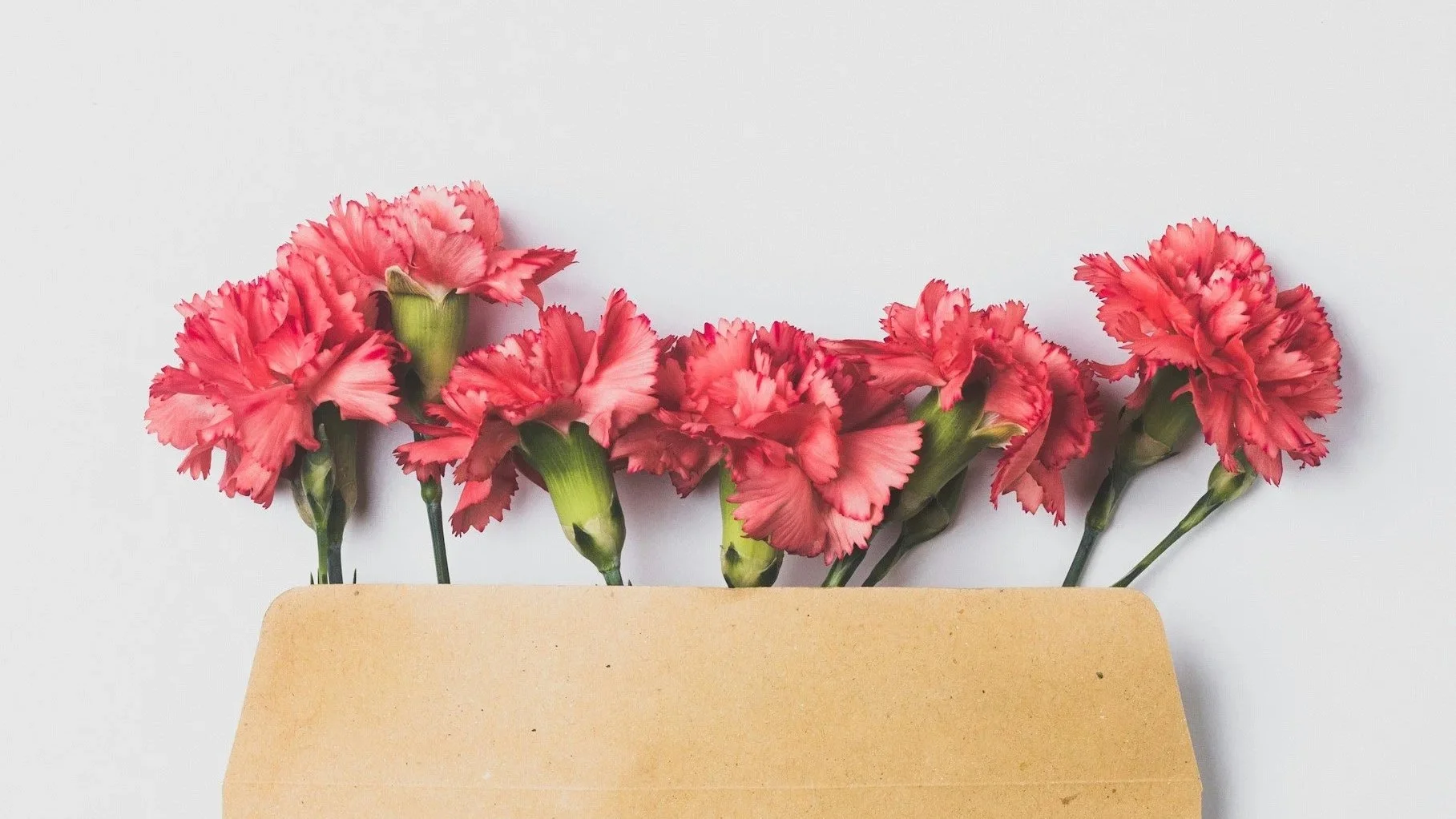
A reflection for every heart that holds more than one feeling today
My phone lit up this morning as I was getting ready for the day.
It was a text from one of my close friends — the kind of friend who knows the unspoken things, who holds your story with care even when you've moved on to other conversations. Today, on Mother’s Day, She was doing something a tender and meaningful thing.
She was remembering me.
She wrote to say she was thinking of me on this day, that she sees the way I nurture others. From Samson (my dog), to my clients, to family, and friends. She knows the ache I carry in my heart, the unmet longing of having children. And then she said something that stopped me mid-curl (and no, I didn’t burn off my hair): she thanked me. She thanked me for the way I nurture the people around me. For the way I show up. For the way I love.
I sat with that text for a long moment. I read it twice. Tears came to my eyes —the kind that says I feel seen. What a gift she gave me this morning. What an act of love, to hold space for someone's grief and call out their beauty in the same breath.
That text, I realized, was itself a picture of what I want to talk about today.
Both/And.
The Day That Asks Too Much of Us
Mother's Day is a beautiful holiday. It is also, for many, is a complicated one.
For some, it is a day of pure celebration — bouquets and brunches and phone calls and joy. And that is wonderful. Genuinely. I don't want to dim that. If that is you, you are worthy of so much celebration!
For others — for so many others — it is a day that carries weight alongside the warmth. Joy alongside of pain. Sometimes that weight is heavy enough to make it hard to breathe in church, to scroll through social media, to sit at the table.
We've been taught, mostly, to feel one thing at a time. To be grateful or sad. To celebrate or grieve. To be okay or not okay.
But what if the truest, most honest thing is to hold both?
My Both/And
I will be honest with you, because that's why we're here.
I have an extraordinary mother. She is one of God’s greatest gifts in my life — a Godly woman of warmth and wisdom and faithfulness, a prayer warrior, a constant, someone who continues to believe in me and cheer me on. A mom who taught me about Jesus. Who helped me see that the pain in this world is not the end of the story. I am so deeply grateful. Celebrating her today is not a performance. It is a genuine overflow of my heart.
And.
I never had children. This was not what I had dreamed of, what I wanted, or what I would have chosen. From the time I was young, I wanted to be a mom. I played house, and teacher, and orphanage. I would have all the babies and care for them and thought it was a precursor for what was to come. Yet, that did not happen. Yes, I could still foster or adopt, and I am definitely open and praying about that. Yet, for today, not being a mom is a deep ache in my heart — a desire that lived in me like a quiet, persistent hum for years. A longing that doesn't fully go away. Not on ordinary Tuesdays. And certainly not on Mother's Day.
Both of these things, gratefulness and an ache, are true at the same time.
The gratitude for my mother does not cancel the grief for the children I never held. The grief does not swallow the gratitude. They exist together, side by side, like two notes in a chord — sometimes dissonant, sometimes surprisingly harmonious, but always both present.
I have learned — slowly, imperfectly — to hold space for both.
The Space Between Two Gardens
There's a way of understanding life that has become a deep anchor for me: we live between two gardens.
The first garden is Eden — the world as it was meant to be, whole and unbroken, full of everything good. The second garden is the one that's coming — the renewal of all things, the place where every ache is answered, every loss is redeemed, every longing is finally, fully met.
We live in the middle.
That middle is not nothing. It is full of beauty and grace and love and laughter. But it is also full of not-yet. Of ache. Of the space where something that should have been, wasn't.
I trust the God who holds both gardens. I trust that my longings are not mistakes, are not forgotten, are not evidence of some failure on my part or His. I trust that He sees me — fully — in this in-between place.
That trust is not the absence of grief. It is the companionship of grief. It is saying: I feel this, and I still believe. I ache, and I still choose to trust in You.
The sadness does not take over the gratefulness.
The gratefulness does not replace the sadness.
I hold space for both.
For You, Too
Maybe your both/and looks different from mine. Maybe it looks like:
The woman whose mother has passed away. You may celebrate her today — and you may miss her in a way that is physical, a missing that lives in your body. Both are holy. Both are true.
The woman who does not have a good relationship with her mother. Today may bring more pain than celebration. That is real. You are not wrong for feeling it. The complicated grief of a relationship that should have been different is its own kind of loss, and it deserves to be named.
The woman who has lost a child. You are a mother. Full stop. The fact that your child is not in your arms does not change what you carry in your heart. Today can be unbearably painful, and you are allowed to feel all of it. Your child was real. Your love is real.
The woman who aches to be a mother and isn't yet — or may never be. I see you. I am right there with you. The longing is not weakness. The hope is not foolishness. The grief is not ingratitude. You are allowed to feel the full weight of this day.
The woman who mothers’ children not born to her — through fostering, adopting, mentoring, stepping in, showing up. Your love is not less because it doesn't share DNA. It is, perhaps, one of the most deliberate and fierce forms of love there is.
The woman who nurtures without the title. The teacher who pours herself out for her students. The friend who shows up at 2am. The aunt, the neighbor, the mentor, the woman who quietly, consistently loves the people in her orbit. Your nurturing counts. It matters. It is seen.
And to others who I have not named here. Your story matters.
What My Friend's Text Taught Me
When my friend texted me this morning, she didn't try to fix anything. She didn't say "but at least you have..." She didn't minimize the longing or rush me toward a silver lining.
She just held it with me. She held the grief and the beauty at the same time. She said, in effect: I know this day is complicated for you, and I also want you to know that who you are is good and your love is real and I'm grateful for you.
That is what I want to offer to anyone reading this today.
I don't want to wrap this up too neatly. I don't want to offer you a tidy bow when you might be sitting in the middle of something genuinely hard.
But I want you to know: your both/and is valid. Your grief and your gratitude can coexist. Your longing and your trust can coexist. Your sadness and your love can coexist.
You don't have to choose just one feeling today.
A Prayer for the In-Between
If it's helpful, sit with this for a moment:
For every ache that went unmet — You are seen.
For every love you gave that no one named today — It counted.
For every year you hoped and it didn't happen — That hope was not wasted.
For every grief you carried quietly through the flowers and the brunches and the cards — You are not alone.
For every reason this day is complicated — There is grace for that, too.
We are between two gardens. The second one is coming. And until then, we hold our both/ands — with open hands, with honest hearts, with as much trust as we can muster on any given day.
Today, for me, that trust is real. The ache is real. The gratitude is real.
All of it, at once.
Happy Mother's Day — in whatever way that lands for you today.
If this resonated with you, I'd love to hear your story. Share this with someone who might need it. You never know who's quietly holding a both/and today.